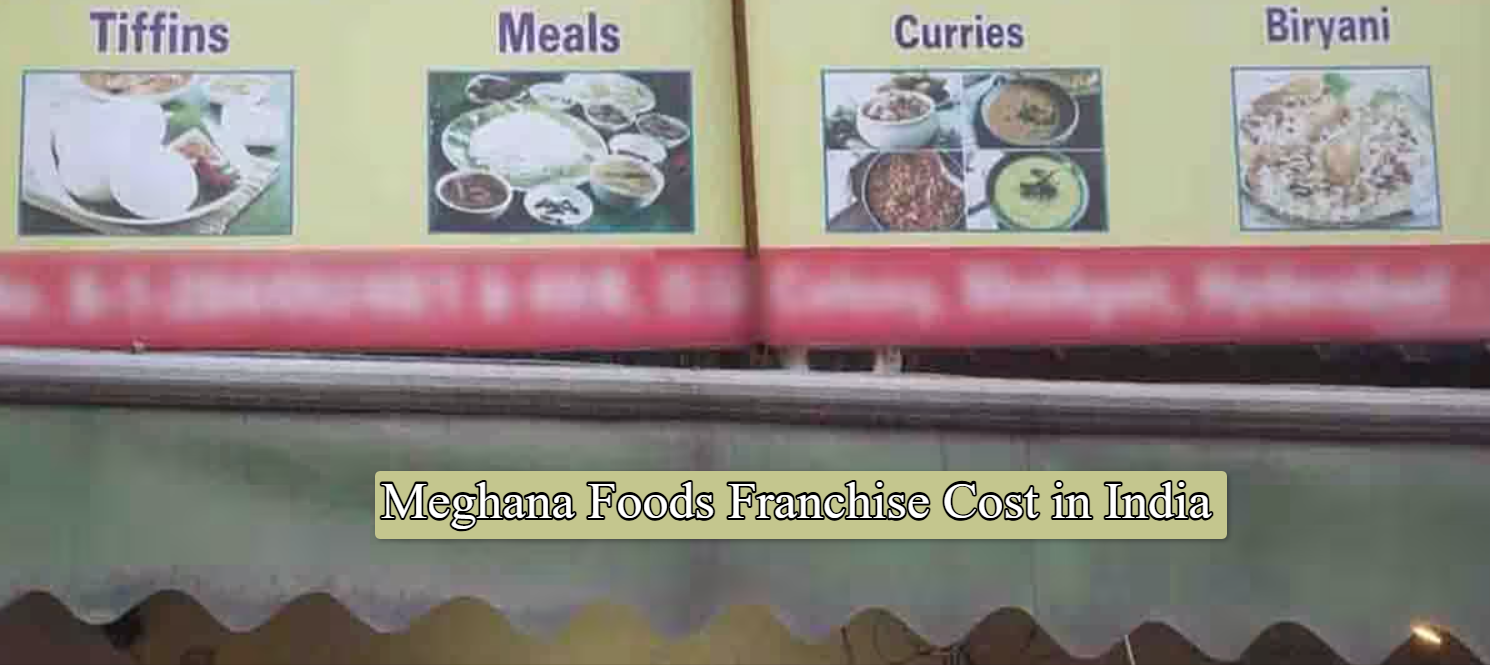
If you’re looking at a franchise restaurant possibility in India specifically in the biryani or QSR (Quick Service Restaurant) area and Meghana Foods stands out as an excellent choice. The brand has earned significant recognition throughout South India (and further afield) for its Andhra/South-Indian biryani products. In this blog I’ll go over how franchises work, estimates of cost of ROI, eligibility requirements the steps to follow to applyas well as some additional information that you need to know prior to making an make a decision to invest.
about Meghana Foods
Meghana Foods is a well-known Indian restaurant chain, particularly well-known in Bengaluru as well as various other South Indian markets. The brand is gaining popularity for its biryani, and Andhra-style meals, as well as its delivery/aggregator presence. The most frequently cited metrics are that show the level-of-unit EBITDA Margins have been estimated to be 28-32% and payback timeframes for outlets that are between 18 and 24 months in locations that are good.
The draw for an investor in a franchise is: existing brand recognition, delivery capabilities with a relatively scalable model with a solid footprint in urban areas.
Franchise Model What is it? Meghana Foods Works
As with other franchise models in the restaurant industry The brand provides prospective franchisees the opportunity to run within their Meghana Foods name, follow their menu, recipes, operational guidelines signage, branding, and their SOPs (Standard Operating Procedures). The franchisee handles the lease of the location, building out the store personnel, operations, and local marketing and the brand provides assistance (training as well as brand guidelines as well as tie-ups in supply chain and possibly purchasing). For brands with a strong reputation, such as Meghana delivery and alliances with aggregators are incorporated or backed by central operations this is a plus.
Typically an franchise model would include:
- One-time franchise/brand fees
- Setup costs (interior, kitchen equipment, signage)
- Working capital / initial inventory
- Indefinite costs (royalty/marketing fee) although exact figures for Meghana aren’t publicly described in all sources.
- The site must have a significant footfall, especially commercial in the city, or with high traffic/delivery potential.
Although I could not find a comprehensive and fully-official brochure that lists specific investment amounts for each format that is offered by Meghana Foods across India, there are constant mentions of margins, investment levels, and payback times. For instance, a food franchise commentary states: “Payback period: 18-24 months” for all outlets of Meghana.
Estimated Cost Breakdown (Based on Data that is Available and the Practical Assumptions)
Since the brand does not publish one investment number standard for all locations or formats I’ll provide a reasonable estimate based on publicly available information and typical components of cost for franchises in restaurants.
Groceries
Components of investment to make plans for:
- Franchise/Brand Fee: The the specific numbers is available for Meghana Foods isn’t reliably published in the public domain (at the very least from my search).
- Interior and set-up (dining space furniture, kitchen signs)
- Kitchen equipment, display, POS, billing system, delivery packaging integration
- The initial inventory (food raw ingredients, packaging materials, the first week of operations)
- Working capital (staff wages, utilities as well as variable cost pooling during the those first few months before the business stabilizes)
- Marketing and launch costs prior to opening
- Licenses, approvals Local compliance, deposit/rent advance for the location.
Estimated ranges:
Based on the margin and payback period information (18-24 month) and the category of brand an estimated cost for an investment in a standard retail outlet in a urban retail market (maybe 300 – 500 square feet, or perhaps slightly more) could be around 40-80 lakhs or more (for prime areas) however, certain smaller formats could be less. This is an estimate since I could not find an official figure for the cost of Meghana’s franchise in India across every city.
For instance, a report on the cost of food franchises (not Meghana specific) shows for mid-range QSR/F&B brands: “Investment range Rs10-30 lakhs” for formats between 300 and 600 sq.ft. If Meghana is placed a bit higher (given the size, brand and the size of its delivery footprint) it could be higher of the bracket or higher.
In general terms for an imaginary outlet:
- Brand/Franchise Fee: between 10 and 20 lakh (not officially, but just an assumption)
- Kitchen equipment and fittings Estimated at Rs15-30 lakh, based on the location and the size
- Initial working capital, inventory, marketing, deposits: say Rs5-10 lakh
- Total: Possibly within the range of between Rs30-60 lakh or more in a Tier I city. In Tier II/III cities, you may see smaller amounts however, make sure to check the company.
Revenue, Margins & ROI Expectations
From the media: Meghana Foods outlets reportedly have unit-level EBITDA margins of between 28 and 32 percent. The payback time is stated as 18-24 months by a number of sources to indicate a profitable unit. This is a rough estimate.
Example:
Let’s suppose that a store generates 1 crore annually in revenue (for an illustration). With a margin of 30 of net revenue, the figure is approximately 30 lakh. If your initial investment was $45 lakh, you could recoup your investment over ~1.5 months (18 months). Of course, this is an oversimplified scenario: the actual profits is contingent on the electricity, rent, utility costs local competition, delivery cut, and the cost of the goods sold. In less favorable locations, the payoff could be 30-36 months or even longer.
The most important variables that affect ROI
- The location is well-known, with a high footfall. excellent delivery reach, and clever rental.
- Efficiency and size: a lower costs per square foot is helpful.
- Delivery + dine-in combination: with the increasing number of online orders the presence of delivery can boost the margins.
- Marketing and brand recognition local presence: a strong local presence will result in repeat customers.
- Cost control: cost of labour and wastage, packaging (especially in the case of a heavy delivery).
- Site lease/rent structure: If rent is too expensive, it will significantly impact margins.
What questions should you inquire about the brand:
- What are the typical sales rates for stores in your desired city or state?
- What is the typical ticket price or order quantity (for delivery and dine-in)?
- What are the terms for royalty/marketing If there are any?
- What assistance will be offered (training or supply chain support marketing)?
- What is the estimated turnaround time to reach break-even given your location?
Eligibility and Ideal Profile of a Franchisee
To be successful in establishing the Meghana Foods franchise, prospective investors must have the following qualifications:
- financial capacity Ability to fund your purchase (capex plus working capital) and take on delays that could occur in breakeven.
- Ability to source location Find an outlet that is suitable (size size, the location, and visibility, with a strong delivery reach) within the city that has been approved.
- Operational mentality If you are hiring a manager you need to be aware of F&B operations including staff management as well as inventory control and customer service.
- A commitment to the brand’s standards Follow Meghana’s recipes operational workflows, food-quality standards, and image of the brand.
- Local market perception It is important to understand the local market, consumer behavior and delivery patterns within your area or city.
- Regulatory & compliance readiness: Food licences (FSSAI), GST, health & safety norms, labour laws.
While previous experience with restaurants is beneficial, a lot of franchises are willing to allow first-time operators provided they have sufficient capital and a solid area. Check the franchise agreement thoroughly and then negotiate or clarify any conditions you’re unsure regarding.
How to Apply for the Meghana Foods Franchise
This is a step-by-step guideline to follow:
- Start by conducting research and visit the stores :
- Visit any existing Meghana Foods outlets in your region or city. Learn about operations, delivery and footfall reviews of customers.
- Examine whether the food and products are in line with the tastes of your local market and preferences.
- Contact brand/franchise development team :
- Go to Meghana Foods’ website. Meghana Foods website (or contact through their franchise enquiry contact) and let them know you are interested.
- Send us your profile (name contact number, name, city of your interest, investment capacity and your experience).
- Receive Franchise Information Pack :
- The brand will mail an Franchise Information Memorandum (FIM)/brochure with costs and requirements for the site, formats options, the support offered fee/royalties, and agreements and terms.
- Take note of the details. Find out the details of hidden costs, royalties and marketing costs, territorial rights, and exclusivity.
- Select the site and site approval :
- Choose 1-2 possible locations (size rental and delivery catchment, footfall).
- The brand will examine and then approve the site in accordance with its standards (size or space for trade and visibility).
- Pay fees and sign agreement :
- After the site has been approved and you are happy with the terms, you can you can sign an agreement to franchise.
- Pay franchise/brand fees and the initial deposit needed.
- Set-up and training for stores :
- Make sure the outlet is set according to the guidelines for your brand (interior, kitchen branding and signage).
- The company offers training to employees and for you such as menu preparation services, standards for service packaging for deliveries as well as POS systems.
- Final pre-launch audit conducted by the Brand (equipment test, training for staff review, SOP conformance).
- Launch and operations :
- Soft launch, followed by grand opening local marketing, delivery-launch promotions.
- Control sales, operations customer feedback Delivery efficiency Cost control.
- Support and review on a regular basis :
- Brand support is a must for menu changes, marketing, and the efficiency of supply chain.
- Review key performance indicators (sales and costs of goods, cost of labour and rent %) and improve.
- If your operation is stable You can look into a the possibility of a second unit or expansion (if your brand permits multi-unit and zone development).
Additional Tips & Considerations Before You Make Your Investment
- Rent and lease costs are important: A well-known image won’t cover poor location or a high rent. Create your break-even using a an actual rent.
- The delivery mix is important Food delivery is becoming more important. Be sure that your company has access to delivery and profit-friendly packaging.
- Competition locally and differentiating in metro areas particularly, many QSR and biryani chains have to compete. Your USP will be branding, quality speed, cleanliness, speed and focus on repeat-business.
- Working capital buffer The first 3 – 6 months could be a ramp-up time. Make sure you have enough buffer to cover the costs of staff utility costs, as well as slower sales.
- Make sure you understand the terms of royalty and fees Some brands have annual fees for brand marketing or royalty. Be sure to understand the nuances.
- Exit/renewal conditions Be aware of what happens following the initial period; can you renew and what happens if you decide to end your contract early.
- Size of the site and formats Some brands offer smaller delivery-only or compact formats with lower costs -Check if Meghana provides this option in your town.
- Contact existing franchisees If you can contact current franchisees at Meghana Foods to understand real-world issues including staff turnover in the delivery and food costs changes.
The Final Word
Meghana Foods offers a promising franchise opportunity in India’s organized restaurant/biryani sector. With a strong brand name and a solid profit margin (28-32 percent) and payback time of 18-24 months (in good conditions) it could be an option. However, you’ll need find the best site, make a commitment to the highest standards of operation, and put in enough capital (likely several tens of millions of rupees in a urban area) to be able to succeed.
Based on your personal situation (living in Delhi seeking to create income, and willing to put in some time per day and invest money) This is what I’d suggest you do:
- Do an online scouting exercise right now to find possible locations in Delhi and NCR (or close by) that meet the size/rent requirements for QSR/restaurants.
- Request an comprehensive Franchise proposal form Meghana Foods to validate the cost and format for Delhi/NCR (they might have regional-specific numbers).
- Create your small business plan that is based on the assumption of conservative sales (maybe consider 70% of Metro average) and test whether the ROI is feasible for your budget.
- While you’re at it, look over other similar franchises for restaurants (budget between Rs20 and 50 lakh) to evaluate the worth of Meghana as compared to other franchises.
 1
1